TODAY, TUESDAY MAY 12:
Reenat’s 3:30 and 4:15 RSP classes have been cancelled. Additional makeup classes have been scheduled for Tuesday, June 9th. Email silvermusic@silvermusic.org for more information. Thank you!

TODAY, TUESDAY MAY 12:
Reenat’s 3:30 and 4:15 RSP classes have been cancelled. Additional makeup classes have been scheduled for Tuesday, June 9th. Email silvermusic@silvermusic.org for more information. Thank you!
 FAMILY CONCERTS!
Saturday, May 16, 5pm, Riverside Park
(enter near entrance at 74th St/West End)
Sunday, May 31, 5pm, Sakura Park
(Riverside Drive + 122nd St)
FREE
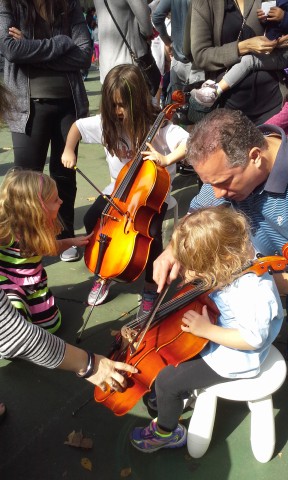
Join us on Saturday, May 16 at Riverside Park and Sunday, May 31 at Sakura Park for fun musical games, activities, and performances hosted by Silver Music! Ideal for children ages 0-6. Event will include an instrument petting zoo, sing-alongs, fiddling, and a RAFFLE FOR A FREE CLASS AT SILVER MUSIC!
Come learn more about our school and enjoy music in the park with your kids!
If you have any feedback you would like to share with us, please take a moment to fill out our anonymous evaluation forms.
LESSON TEACHER EVALUATION FORM
Thank you!
On Sunday, June 7th, Silver Music will be hosting renowned Suzuki cello teacher, Nancy Hair, in two events that are open to Suzuki students, parents, and teachers in our greater NYC community. We hope that you will be able to join us for this unique opportunity!
Nancy Hair Workshop Events:
Cello Play-In
1:30-2:30, Mary Flagler Cary Hall
The DiMenna Center, 450 W 37th St
Nancy will lead an open cello class for students playing Twinkles through Book 5 at Cary Hall in The DiMenna Center for Classical Music. A Play-In is meant to motivate students at multi-levels and will be a very exciting opportunity for your child to participate in a class led by Nancy. It will be similar format to our Suzuki weekly cello group classes. There is ample room for parents and other friends and family to join us as audience. This event is open to the greater New York City Suzuki community, so feel free to invite your cello friends from other schools. Children in our introductory programs are invited to attend as well!
Cello Masterclasses
Masterclass I 10:30-11:30, Silver Music, 218 West 72 Street
Performers: Sabrina M, Maeve O, Lucy R, Hava C
Masterclass II 3:00-4:00, Norman S. Benzaquen Hall
Performers: Andrew C, Kiran G, Sophia P, Autumn R
Masterclass III 4:00-5:00, Norman S. Benzaquen Hall
Performers: Lucas C, Christoferos G, Sophie J, Sivan N
The DiMenna Center, 450 W 37th St
We will be holding two masterclasses with performers of varying levels at Benzaquen Hall in The DiMenna Center. A masterclass is a combination of a recital and an open lesson. Each performer will play through a piece and then Nancy will work with the student for about 15 minutes as she might in a lesson. Since it is geared for an audience, Nancy will discuss issues and teaching points that you and your child can make use of at home.We invite you to come see a window into how teachers work on building students’ technique and musicality.
Pricing for this event is as follows:
(Each price covers a family of four)
For Students:
$75 for Play-In and Masterclass: Registration Deadline: Monday, June 1
$60 Early Registration discount*
Registration (including payment) must be received by Friday, April 17
To register, please complete our student online registration, along with payment.
For Teachers:
$30 to observe the Play-In and Masterclasses.
To register, please complete our teacher online registration. When two of your students register for the event, this $30 teacher fee will be waived! (Please fill out the registration form with your students’ names. Credit card information will not be charged).
Nancy Hair Biography
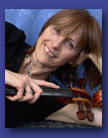 Nancy is a highly sought-after Suzuki teacher from the Boston area. She has been a teacher-trainer since 1988 and enjoys traveling and teaching at institutes, workshops, conferences, and festivals. Nancy teaches at the Hartt School, New England Conservatory Preparatory, and All Newton Music School. In the summer she is on faculty at numerous Suzuki Institutes including Chicago, Ithaca, and Hartt. Nancy has studied Alexander Technique, has completed graduate studies in pedagogy with Ithaca Talent Education, and has been seen in performances with Pro Arte Chamber Orchestra, New Hampshire Symphony, Opera Company of Boston, and the Rhode Island Philharmonic. Nancy is looking forward to working with students and faculty at Silver Music this June!
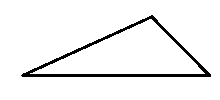
The Suzuki Triangle, the metaphor for the connected relationship between Student, Parent, and Teacher, is properly drawn and envisioned as an equilateral triangle–the equal importance of each relationship is at the heart of the metaphor.

As our focus is naturally drawn to the child, the part of the triangle who we see as the primary actor, our geometry can be distorted and our triangle skewed:
 Similar to the relationship between parents, the relationship between the two adults guiding your child’s Suzuki journey will directly and indirectly affect the trajectory and quality of the trip. So how do we keep our triangle in shape? Here are a few tips:
If you ever have questions about what your role is in the triangle, or how to better communicate with your teacher, just ask! Shinichi Suzuki said, “the fate of the child is in the hands of the parent”, heavy stuff… but we’re here to help navigate that responsibility so make sure to give some time and thought to the third side of the triangle–it can be your solace and support.
There are no regular classes or lessons this Friday, April 3rd through Friday, April 10. Happy Spring Break…again!
Sign up now to join us for our spring break camps this March and April! Email silvermusic@silvermusic.org
SPRING SESSION:
March Instrumental Camp
Session I: Monday-Friday, March 16-20, 1-4pm, 218 W 72nd St $450
Session I: Registration Deadline ~ March 1
EARLY REGISTRATION ~ February 13 ($25 discount)
*Siblings also receive a 10% discount.
April Music and Art Camp
Session II: Monday-Friday, April 6-10, 9-12pm, 218 W 72nd St $450
Session II: Registration Deadline ~ March 30
EARLY REGISTRATION ~ March 16 ($25 discount)
*Siblings also receive a 10% discount.
April Instrumental Camp
Session II: Monday-Friday, April 6-10, 9-12pm, 218 W 72nd St $450
Session II: Registration Deadline ~ March 30
EARLY REGISTRATION ~ March 16 ($25 discount)
*Siblings also receive a 10% discount.
For more information, visit our camp page.
We are still flying high from our workshop weekend with Carrie Reuning-Hummel, a visiting Suzuki violin teacher from Ithaca, New York. We want to extend a big thank you to all of our parents and kids who were able to attend! We hope you got something meaningful out of the weekend and would love to hear what you took away or what you most enjoyed.
I wanted to share my thoughts about the weekend, as I learned so much and took pages and pages of notes!
One big message we felt throughout the workshop was from Carrie’s childhood experiences with Dr. Suzuki, whom she met at age 5 and was able to work with for a short time in Japan at age 15. She recounted that Dr. Suzuki allowed her to feel “seen and known”, and that he had the “opposite of judgement” in his teaching relationship with her. Carrie took this profound feeling with her into her teaching and subsequent Suzuki parenting of her two children. Hearing about her experiences challenges us to try to see our students and children for who they really are. The more we understand about our children in terms of temperament, intensity, etc, the more we can figure out the best way to practice with our children. Carrie has written a helpful book called, A Time To Practice: A Companion for Practice, and recommended a bunch of additional books, including Raising Your Spirited Child, The Passionate Learner, Mindset, The Talent Code, and Point of Power, all of which I am diving into!
At Friday afternoon’s master class, Carrie talked about imagining the student in a years time working on a more difficult piece. She looked for things in his/her technique to adjust that could make playing the more difficult pieces easier.
Overhead at the master class:
“You know who I think the bad guy is? The thumb is kind of pushy!”
“You just found out a new way!”
“Awesome! You’re figuring it out!”
“Let’s add one more thing to our recipe.”
“I’ll do four notes, you do four notes, and let’s see if we sound like the same person.”
“Let’s add more sparkle to your playing.”
More later on the the fun moments shared at the Saturday afternoon Play-In!

We really appreciated Sara Marie Brenner’s post, To Do or Not to Do: For Parents, the dos and don’ts of private music lessons. If you haven’t read it, you can check out the full article here. Below are some of our favorite points paraphrased and expanded on. Let us know what points really hit home with you!
How to support your child’s musical journey…
DO:
DON’T:
As your child advances in the repertoire and in their ability, their pieces quickly get more and more complicated. Your role as a practice partner changes from a hands on helper to that of an advisor. Understanding practice as an exercise in problem solving and being able to offer your child some ideas on how to solve their challenges will help you increase the productivity of each practice session.
The key to productive and efficient practice is Unit Practice. Suzuki students begin their studies with unit practice—the rhythms that each student practices on single notes and open strings, “I like Chocolate Ice Cream”, etc., are “units” that are practiced separately for months, even after they have been strung together to build a student’s first Twinkle.
All pieces, no matter their length or level, are made up of such building blocks, and it is up to the advancing student (with help from the parent) to find the relevant units, take them out of the context of the piece, and practice them in a variety of creative ways to build ability and ease. Below are just a few ways that good practicers manipulate units. Your teachers are always happy to offer you more!
Undoubtedly your teachers have instructed you in these practice techniques for various passages, but as the pieces grow in length and difficulty, you and your child will benefit enormously from taking ownership of the process of devising practice strategies and putting them into effect. Besides from increasing your child’s ability, turning practicing into a critical thinking exercise may even give you the added benefit of a more engaged and enthusiastic practicer! Let us know how it goes, and we’d love to hear any other unit practicing tips that work well for your child.