
Silver Music Calendars are on sale for $10! Stay on top of Silver Music events, school closures, composers’ birthdays, and other important information while celebrating each month with a beautiful Silver Music photo. Calendars include professional photos from the 2014 and 2015 String Festivals and our lessons and classes. CLICK HERE to order! Calendar includes the months September 2016-August 2017.
Blog
-
Faculty Feature: Meredith
I started playing the violin just before I turned four. I grew up in Nebraska and went to a Montessori pre-school on a farm called Prairie Hill. Prairie Hill happened to have a Suzuki violin program there and when I heard the other kids playing these 1/16 size violins I begged my parents for lessons. They rented my first violin and I immediately fell in love with the instrument.
Before we jump into the interview, you should know a few things about my parents. My mother is a professor of Creative Writing and amateur flutist and my father is a professor of Actuarial Science, which is risk analysis, and knows nothing about music. My parents divorced when I was five. My mother moved to Illinois for three years before returning to Nebraska and my father stayed in Nebraska. I would travel between each home every other week and had two different Suzuki violin teachers—one was a very kind, sweet teacher and the other was a strict Chinese teacher who picked me up and turned me upside down for yawning in my very first lesson. Both parents made me practice almost everyday but they approached my violin studies from very different directions. My mom saw music as “fun” and we would often jam together while my dad took a much more analytical and disciplined approach to my lessons stressing repetition (“you must play this song five times with no mistakes”) and sometimes making me play with the CD to which I would exclaim “But dad! It’s too fast!!” My parents also come from very different cultures. My mother is American born and of German descent while my father is from Guyana, South America. My mother had a more relaxed mindset towards child rearing whereas my dad was incredibly strict. These opposing forces in my life lead to an incredible balance of discipline and artistic expression.
What were your thoughts about starting lessons?
Mom: At first I didn’t want to, I thought “this is going to be a big time investment.” And it sure was. But you so badly wanted a little violin, so we gave in. Watching the Suzuki method unfold, I was struck by the genius of it. You were learning a paradigm for learning. Whether your kid is going to be a musician or not, all kids need to learn how to learn.
Dad: I thought it was a great idea. I never had the chance to study music—well once I had the chance to take math or piano lessons. I went with math. I didn’t know kids could do violin. At Prairie Hill [a Montessori Pre-school], they had a Suzuki violin program. it was fortuitous that the violin was part of the education at your pre-school.
Did I always like to practice?
Mom: You never objected. I never had a problem getting you to practice. You were 3 years and nine months when you started. At the beginning, you would practice 3-5 minutes. But then I discovered that if I played the flute or piano with you, you would play 30 minutes or so. It was a lot of playing for a little kid. Because you were playing so much, you progressed very quickly. We would work on lesson stuff and make-up our own things. When you hit book five, the material was too tricky and I had to stop playing with you. By then you were highly self-motivated, you didn’t need me to play with you any more. I remember when you jumped from 30 minutes of practice to an hour a day. It was a huge leap. You were maybe nine or ten years old.
Dad: You were always disciplined. Practice wasn’t like “let’s have ice cream” [laughs]. We did it everyday. You didn’t always want to but we made you. Once you got tired, you would shut down. You would make lots of mistakes. But you always tried.
What kind of practice habits did we have?
Mom: When you were little, 4 or 5 we didn’t really have a schedule. It was whenever we got around to it. When you were a bit older it was usually right before dinner. However, it did become tricky with all of your homework and after school activities! But we made sure to practice everyday.
Dad: We would practice regularly and usually more than was recommended. At least 30 minutes a day. After we got divorced, I made daily practice part of the schedule and you practiced sometimes more than 30 minutes a day. Your teacher wasn’t very demanding but she was very nurturing. It was very important for you to have her in your life. I don’t know anything about music, but I do know that music is mathematical. I was teaching the fingering, the mechanical things. That’s what I was doing. I never learned to play Twinkle as they recommend in Suzuki. I thought it was silly. I tried to in whatever way I could ask you to bring emotion to the music. I didn’t know how to do this technically but we always had that emotional element in your practice.
Was there a point when it became clear that it was all worth it?
Mom: Yes, You had a recital. After the recital, this woman came up to us and said “she has such musicality.” It was one of those moments when someone named something that I was on the verge of knowing about you. The way that you played, there was so much passion. Not all other kids played that way. You were probably ten years old.
Dad: I never expected this to become a career. I wanted you to get something I never had. This was about discipline. I was preparing you for medical school. I thought you would become a physician and play violin on the side. Music was something I missed in my life. All I can play is the stereo [laughs]. I know I would have been a good musician if I had the chance, so I wanted you to have that opportunity.
Is there anything you wish you had done differently?
Mom: No. I think we did everything right. I didn’t have a plan for you to become a musician. I was taking you to all these lessons and music festivals not expecting you to be where you are today. Your dad and I played integral but different roles. Your dad pushed you to take musical opportunities (such as studying at Interlochen when you were thirteen) while I was more of the nurturing and supportive role. It really worked.
Dad: I wish I had saved up more money [laughs]. Your musical training has made me understand America and racism. The biggest shock in your musical journey was how people saw you. You never got the acclaim and applause that you should have when you were growing up. People couldn’t hear what they should hear; and couldn’t see what they should see because you didn’t fit their stereotype. As a foreign born black person, this was the first time I saw the obstacles black Americans face.
What advice would you give to parents who are just starting their Suzuki journey?
Mom: Learning any new skill is very hard. Be prepared for the difficulties and challenges. It isn’t easy. If you play an instrument, play with your child. Even if you aren’t very good, just make music with your child. I would also say, if your child wants to quit I’d suggest to stick it out. Don’t let them quit. There is a lesson in sticking to something. One thing I never encountered with you was the desire to quit.
Dad: Consistency is the most important thing. Be consistent with your child and demand that the child take practice seriously.
Any memories you’d like to include?
Mom: When we went to your first fiddling contest. At home we just figured out how to fiddle. I love bluegrass, Bill Monroe, and the Stanley Brothers. We messed around at home, figured out some tunes, you went to the competition and won first place. What was clear was who was self-taught and who had training. Even then your musicality came through. You were this little black girl on stage, in this plaid dress blowing everyone out of the water!
Dad: When you would have recitals, I was sweating. You would be calm and I was sweating. You’d think I was up on stage [laughs]. I’d be a nervous wreck.


-
SUMMER OFFERINGS
We are offering several camp and introductory class options this summer! Students may also arrange private lessons on violin, cello, piano, and drums.
CLICK HERE TO READ ABOUT OUR CAMPS!

CLICK HERE TO READ ABOUT OUR INTRODUCTORY CLASSES!
CLICK HERE TO LEARN ABOUT OUR INSTRUMENTAL PROGRAM!
-
Percussion Events happening this week!
Kids Percussion Concert &
Open Classroom
Josh Gilgoff
45 Tiemann Place
4:30 Concert
5:00 Open ClassroomWe are thrilled to welcome drummer, Josh Gilgoff to our faculty at Silver Music! Josh will be primarily teaching at our uptown location, 45 Tiemann Place, offering a variety of classes, lessons, and workshops for all ages and levels. We invite you to meet Josh THIS Sunday, April 10th at Tiemann for a Kids Percussion Concert where juggling meets drumming!
Come hear Josh perform and stick around to learn a drum call, meet new instruments and show off your best dance moves! Melody, harmony and rhythm are on display as you witness a brand new technique in percussion. RSVP below! Cost is $10/child, cash or check only.
CHECK OUT ADDITIONAL DEMOS BELOW!
Our Ready, Set, Play! Percussion classes for children from 3-7 years (grouped by age) are designed to develop students’ natural musical ability through body percussion, playing percussion instruments and piano, moving to music, listening, reading and writing rhythmic notation, and singing. These classes ignite children’s interest in creating music with others, as well as encourage and guide them toward the concepts of practicing and mastery of short pieces and specific techniques with each instrument. Students will play piano, hand drums, xylophone, resonator bells, rhythm sticks, and drum set and learn about the role of percussion in different genres of music, including classical, jazz, rock, pop, and many more!
DEMO CLASS: Thursday, April 14 4:00-4:45pm Ages 5-6 years COST: $10
Our Percussion Ensemble class for students ages 7-12 years inspires kids to make music together in a fun and cooperative environment. Kids deepen their sense of rhythm, creative expression, coordination and interdependence between hands, and concentration and listening through playing various styles of music, including jazz…. Open to students of all levels.
DEMO CLASS: Thursday, April 15 5:00-5:45pm Ages 7-12 years COST $10
-
Faculty Feature: Irene
Dr. Shinichi Suzuki, who lived to be 100 by the way, advocated role modeling. American born, my mother was a piano teacher and both, my sister Catherine and I followed in her path having accomplished piano studios of our own. Trained at the St. Louis Institute of Music, she had a following of students most of her adult life.
When it came to training me, the youngest of four, my mother took me to her piano teacher from when she was a teenager. The lessons were downtown Milwaukee on the beautiful lakefront of Lake Michigan. I started lessons when I was 4, and knew how to read music before I could write my name. My first piano recital at age 6 was at the Wisconsin Conservatory of Music where I played the Bach Minuet in G. I remember the long car rides, listening to Michael Jackson on AM radio. Only six years old, but my lessons were at 7:30p on Monday nights because that’s when the esteemed lady could fit me in after my mother was done teaching all of her own students for the day! It didn’t matter to me then though, because I loved it so much. And if I had an extra good lesson, then my mother would take my sister and I to the bakery around the corner for some late night chocolate eclairs! So, you see, my students and their parents know where my gold star charts and color-coded stars in their folders began! Until we as humans know the ‘true’ reward of playing our instrument, we need intermediate bribes. I totally agree with this concept in all aspects of parenting and homework.
When it came time to pitch in for housecleaning, my mother would insist that my sister and I wash the piano keys, all 88 with soap. She’d say, “The piano keys are the ‘germ-iest’ place in the house!” I’ll never forget the time Kataoka, Suzuki’s right hand for the piano department in Japan sent a student to wash hand sduring one of her master classes. There has to be a sense of respect for the instrument before they can begin to understand the music. This also leads to the attitude of playing on a real acoustic instrument as opposed to an electric keyboard which is sometimes likened to a toy.
My parents taught me to live and breathe my talent while growing up. Patronizing the theatre and music was instilled. We had a three bedroom custom contemporary in Milwaukee which back then was not the norm. The front of our vaulted living room adorned oversized picture windows into which I would practice singing and acting while watching my reflection to Julie Andrews, The Sound of Music, complete with drawing and closing the full length drapes, and using the long cord for my mic.
Role modeling speaks louder than words and continues to be a premise of the Suzuki approach. I believe in making myself available, catching students when they’re at their best moments to discuss what goes through their minds, and how they feel alternatively. Never a dull moment, and every student gives me another reason to enjoy what I do. It doesn’t get easier, it gets better.

-
Faculty Recital: 4/17–SOLD OUT!
Silver Music faculty present
A MODERN RECITAL
Sunday, April 17, 2016
6:30pm
218 W 72nd St, New York, New York$12 in advance/$15 at the door
limited seating
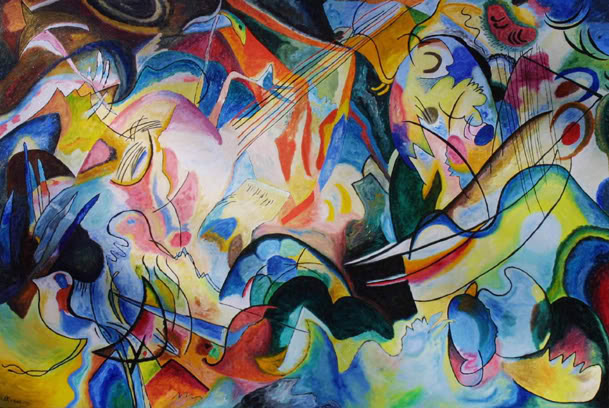
Program includes
Julie-O
Piazzolla’s Spring
Ysaye’s Obsession
Stravinsky “Ragtime”
Shostakovich Cello Sonata
Bartok Duets for Violin and CelloPurchase tickets online in advance
*Advance tickets will be available until April 15
*Cash or check required for tickets purchased at the door
general inquiries may be sent to silvermusic@silvermusic.org
This concert is kid-friendly! Children under 2 ~ free
Featuring
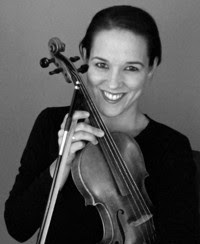
Karolyn Bethke
Violin
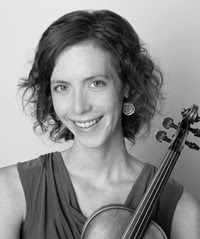
Sage Cole
Violin
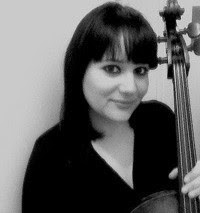
Reenat Pinchas
Cello
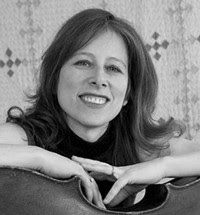
Ellen Silver
Cello
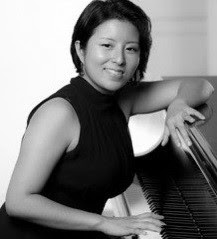
Racquel Borromeo
Piano
-
Parenting Class
SPRING 2016
WORKSHOPS AND COACHING
NYCNew Classes Begin April 19 and 21!

How to Talk So Kids Will Listen and Listen So Kids Will Talk
(Based on the bestselling book by Adele Faber & Elaine Mazlish)
Learn skills that make life with children easier and more satisfying
-
-
- Discipline without hurting or alienating
- Cope with your child’s negative feelings
- Engage your child’s willing cooperation
- Help your child develop a realistic and positive self-image
- Foster an atmosphere of love and respect
- Resolve conflicts peacefully
-
Seven-Week Workshop includes BONUS review session
Time: 7:00-8:45pm
Dates: April 19 – May 24 (six weeks) plus May 31 bonus review session
Location: Silver Music, 218 West 72nd Street, #2FW, NYC
Fee: $550 per person
Seven-Week Workshop includes BONUS review session
Time: 9:30 – 11:15am
Dates: April 21 – May 26 (six weeks) plus June 2 bonus review session
Location: Silver Music, 218 West 72nd Street, #2FW, NYC
Fee: $550 per person
You will receive a workbook at the first session. For How to Talk… you will need to buy two books which will be read throughout the course, Liberated Parents/Liberated Children and How to Talk So Kids Will Listen and Listen So Kids Will Talk, both by Adele Faber and Elaine Mazlish.
Refund and cancellation policy: There will be a $100 cancellation fee per person up to 48 hours prior to the start of the first class. If you need to cancel thereafter, you may apply the remaining credit towards a future workshop.
Class size is limited — register now to reserve your spot!
-
-
Suzuki Summer Institute
Going to the American Suzuki Institute for four years in a row was one of the highlights of my childhood and my very positive Suzuki experience. Each August we packed our car with instruments and roller skates, and drove from St. Louis to Steven’s Point, Wisconsin, for a week-long Suzuki institute experience. To me, it felt like at least a month, full of new and old friends, applauding grandparents, wearing my dorm-room key around my neck on a “cello” shoelace, roller skating to classes, and practicing outside under the trees with my friends. The anticipation of what piece I would be “up to”, what color the T-shirts would be, and which teachers I would have made the summer crawl by as my sister and I waited for August to arrive, practicing our review pieces each night after dinner by picking home-made cards from our special box.
All of my students who have been to a summer institute have been transformed by the experience. Parents benefit at least as much as children, if not more! The simple time to actually focus on your child and the profound process of their learning an instrument is a gift. The brilliant teaching goes to the core of the student’s issues, leaving him/her a much more balanced and happy player by the end of 5 days of focused work. That 5 days really lasts, let me tell you!
I encourage all of you to talk with your teacher about whether your child might be ready for an institute this summer, or whether it is something to really think about for next summer. We can explain and recommend the different institutes around the country (during almost every week of the summer) that would be most suited to your family. If you would like to speak to Silver Music families who have attended festival in the past, let us know and we will put you in touch!
More information can also be found on the Suzuki Association website: www. suzukiassociation.org.
-
Faculty Feature: Karolyn
There is some discrepancy in my family regarding exactly who came up with the idea for me to start violin lessons at age 5. I guess when something turns out to be such a good idea that everyone wants to claim responsibility for it, it doesn’t really matter who wanted it first. We can all agree, however, that we owe a thank-you to the Reyes family. My little friend Kim Reyes brought her violin to show and tell one day and without that demonstration, we might not have known that very small children playing very small violins was even possible. I remember watching her play her little violin with eyes of wonder. At that time I had no idea such a strange instrument even existed. It looked so awkward up there on her shoulder! Who came up with that idea for how to play an instrument?! So far my instrument experience had been limited to guitar and piano. I remember wondering if it was possible that I could play such a bizarre instrument like the violin. It looked hard. I liked that.
Months later, I got my first violin. I was so excited to start playing that I would creep out of bed to open my violin case and gaze at the instrument. There were strict rules regarding how much I could touch it without grown up supervision (touching the instrument on my own was forbidden for at least the first few months of study). I was terrified to lift it out of it’s case at those moments but I loved to look at it.
I started violin in a Suzuki program run by a Nun, Sister Noreleen Rettinger, at Mount Mary College in Milwaukee. My Mom was my practice partner and played the piano with me through the first 4 or 5 Suzuki books. As a grade school teacher (not a professional musician) and mother of 3 girls, she had to fit in her own practice but this often inspired me to practice. I remember many days of happily playing in my room, hearing her play my pieces on the piano, and feeling very jealous. I would think, “ARGGGG! She’s playing MY song!!” I would begrudgingly stomp out to the piano, get my violin out, and play along which led into practicing. She says she does not remember any fights regarding our practicing but I do! It’s so hard to hear criticism from your Mother no matter how constructive! It always felt like she was telling me she did not love me which made me not want to hear it. But learning to value that criticism, recognizing it as support, and not equating it with love is a major life lesson.
When I was 11, Sister Noreleen, who was my teacher at the time, passed away. I was just about to start Suzuki Book 7. At this point I switched to a more traditional teacher who performed with the Milwaukee Symphony. I remember thinking he was incredibly picky, easily agitated, and half the time I had no idea what he was trying to get me to do. Sometimes he would run 45 minutes over our hour lesson time with me (even though I was melting inside). I studied with him until I went to college. But that’s a story for another time!
Here’s a little Q and A with my Mom regarding the early years:
Q. Did I always like to practice? If not, did you have any tricks that made practice easier?
I don’t remember using any bribes to get you to practice. You did what was expected of you, and if you skipped a day or so, it was okay. You worked very hard on your practicing.
Karolyn’s Response: I did NOT always like to practice although I have to say, I usually did enjoy it once I got going. Listening to music always inspired me to practice.
Q. Was there a point when it became clear to you that it was all worth it?
I think the year you decided to do your practicing on your own, without my help on the piano, etc., was the time I realized you had come a long way and that it was all worth it. And then when you mastered playing with vibrato, it was all worth it.
Karolyn’s Response: I think what my Mom is trying to say here, is that when your child starts to learn vibrato, you may seriously consider some very creative ways in which the violin might have an “accident” and you just might be too busy to ever find the time to replace it BUT take heart! Mastery will be achieved! Eventually!
Q. What helped keep us going through the years?
What helped me through the long days of practicing and getting to lessons and group, and tackling the recitals, and paying the big bucks, was remembering myself, and how even though I didn’t practice a lot, my parents kept paying for my lessons and encouraging me to continue. As I matured, my talent matured, so that one day, after playing many scales on the piano, I could suddenly sight read – that led to being able to play for my school classes, for chapel services, play for and direct school musicals, and to join choirs like Bach Choir. I could see you maturing and always progressing, and knew it was good to keep going with it all.
Q. What kind of practice habits did we have?
I kept practice time at a regular time and as brief and painless as possible, knowing every little bit was helpful, in the long run, and not wanting you to develop a hatred for it. I was not terribly picky about things as you didn’t need too much of that and your teachers did that. You never asked to quit and I think that was because you were successful at the recitals and were getting lots of praise and you could see where you were going with it. You picked it up fast. I trusted your teachers to move you along at the right speed.
Karolyn’s Response: I would like to add that “successful” at recitals did not mean performing my pieces without mistakes or to someone’s definition of perfect. I definitely did not do that! I knew it, too! I learned that working up a piece and communicating the music in front of an audience was part of an important creative process. The people around me made me feel successful for just having gone through the process. What I later realized was that just to take part in the process again and again was building fundamental life skills. I set an intention, worked hard, and saw the project to completion.
Q. What’s the best time you remember having with me surrounding music?
Probably the best music time I remember having with you was when we were in group recital together and I was playing piano and you were playing violin. All those times when we could play together were very special.
Karolyn’s Response: YES! I agree! I am so grateful for the experiences we had playing music together. Those experiences helped me form a love of ensemble playing from the earliest years.

-
Practicing Penny Challenge!
Congratulations to all our students who participated in our annual String Festival!
We had several violin and cello students who submitted sheets for our Silver Music Practicing Penny Challenge! Students who turned in their sheets and practiced a total of 325 minutes during the month of February will be invited to a pizza party (invitations forthcoming!). We also had one violinist and one cellist winner of the pennies!
 CELLO PENNY WINNER:
Ava K (918 minutes!)Cello Runner-Up:
Kiran G (508 minutes!)VIOLIN PENNY WINNER:
Hayato Z (1239 minutes!)Violin Runner-Up:
Irene G (1230 minutes!)All your hard-work and practice minutes paid off at the Festival. CONGRATULATIONS!


