Category: Spotlight

recognize extra effort in musicianship

  • Faculty Feature: Meredith

    I started playing the violin just before I turned four. I grew up in Nebraska and went to a Montessori pre-school on a farm called Prairie Hill. Prairie Hill happened to have a Suzuki violin program there and when I heard the other kids playing these 1/16 size violins I begged my parents for lessons. They rented my first violin and I immediately fell in love with the instrument.

    Before we jump into the interview, you should know a few things about my parents. My mother is a professor of Creative Writing and amateur flutist and my father is a professor of Actuarial Science, which is risk analysis, and knows nothing about music. My parents divorced when I was five. My mother moved to Illinois for three years before returning to Nebraska and my father stayed in Nebraska. I would travel between each home every other week and had two different Suzuki violin teachers—one was a very kind, sweet teacher and the other was a strict Chinese teacher who picked me up and turned me upside down for yawning in my very first lesson. Both parents made me practice almost everyday but they approached my violin studies from very different directions. My mom saw music as “fun” and we would often jam together while my dad took a much more analytical and disciplined approach to my lessons stressing repetition (“you must play this song five times with no mistakes”) and sometimes making me play with the CD to which I would exclaim “But dad! It’s too fast!!” My parents also come from very different cultures. My mother is American born and of German descent while my father is from Guyana, South America. My mother had a more relaxed mindset towards child rearing whereas my dad was incredibly strict. These opposing forces in my life lead to an incredible balance of discipline and artistic expression.

    What were your thoughts about starting lessons?

    Mom: At first I didn’t want to, I thought “this is going to be a big time investment.” And it sure was. But you so badly wanted a little violin, so we gave in. Watching the Suzuki method unfold, I was struck by the genius of it. You were learning a paradigm for learning. Whether your kid is going to be a musician or not, all kids need to learn how to learn.

    Dad: I thought it was a great idea. I never had the chance to study music—well once I had the chance to take math or piano lessons. I went with math. I didn’t know kids could do violin. At Prairie Hill [a Montessori Pre-school], they had a Suzuki violin program. it was fortuitous that the violin was part of the education at your pre-school.

    Did I always like to practice?

    Mom: You never objected. I never had a problem getting you to practice. You were 3 years and nine months when you started. At the beginning, you would practice 3-5 minutes. But then I discovered that if I played the flute or piano with you, you would play 30 minutes or so. It was a lot of playing for a little kid. Because you were playing so much, you progressed very quickly. We would work on lesson stuff and make-up our own things. When you hit book five, the material was too tricky and I had to stop playing with you. By then you were highly self-motivated, you didn’t need me to play with you any more. I remember when you jumped from 30 minutes of practice to an hour a day. It was a huge leap. You were maybe nine or ten years old.

    Dad: You were always disciplined. Practice wasn’t like “let’s have ice cream” [laughs]. We did it everyday. You didn’t always want to but we made you. Once you got tired, you would shut down. You would make lots of mistakes. But you always tried.

    What kind of practice habits did we have?

    Mom: When you were little, 4 or 5 we didn’t really have a schedule. It was whenever we got around to it. When you were a bit older it was usually right before dinner. However, it did become tricky with all of your homework and after school activities! But we made sure to practice everyday.

    Dad: We would practice regularly and usually more than was recommended. At least 30 minutes a day. After we got divorced, I made daily practice part of the schedule and you practiced sometimes more than 30 minutes a day. Your teacher wasn’t very demanding but she was very nurturing. It was very important for you to have her in your life. I don’t know anything about music, but I do know that music is mathematical. I was teaching the fingering, the mechanical things. That’s what I was doing. I never learned to play Twinkle as they recommend in Suzuki. I thought it was silly. I tried to in whatever way I could ask you to bring emotion to the music. I didn’t know how to do this technically but we always had that emotional element in your practice.

    Was there a point when it became clear that it was all worth it?

    Mom: Yes, You had a recital. After the recital, this woman came up to us and said “she has such musicality.” It was one of those moments when someone named something that I was on the verge of knowing about you. The way that you played, there was so much passion. Not all other kids played that way. You were probably ten years old.

    Dad: I never expected this to become a career. I wanted you to get something I never had. This was about discipline. I was preparing you for medical school. I thought you would become a physician and play violin on the side. Music was something I missed in my life. All I can play is the stereo [laughs]. I know I would have been a good musician if I had the chance, so I wanted you to have that opportunity.

    Is there anything you wish you had done differently? 

    Mom: No. I think we did everything right. I didn’t have a plan for you to become a musician. I was taking you to all these lessons and music festivals not expecting you to be where you are today. Your dad and I played integral but different roles. Your dad pushed you to take musical opportunities (such as studying at Interlochen when you were thirteen) while I was more of the nurturing and supportive role. It really worked.

    Dad: I wish I had saved up more money [laughs]. Your musical training has made me understand America and racism. The biggest shock in your musical journey was how people saw you. You never got the acclaim and applause that you should have when you were growing up. People couldn’t hear what they should hear; and couldn’t see what they should see because you didn’t fit their stereotype. As a foreign born black person, this was the first time I saw the obstacles black Americans face.

    What advice would you give to parents who are just starting their Suzuki journey? 

    Mom: Learning any new skill is very hard. Be prepared for the difficulties and challenges. It isn’t easy. If you play an instrument, play with your child. Even if you aren’t very good, just make music with your child. I would also say, if your child wants to quit I’d suggest to stick it out. Don’t let them quit. There is a lesson in sticking to something. One thing I never encountered with you was the desire to quit.

    Dad: Consistency is the most important thing. Be consistent with your child and demand that the child take practice seriously.

    Any memories you’d like to include? 

    Mom: When we went to your first fiddling contest. At home we just figured out how to fiddle. I love bluegrass, Bill Monroe, and the Stanley Brothers. We messed around at home, figured out some tunes, you went to the competition and won first place. What was clear was who was self-taught and who had training. Even then your musicality came through. You were this little black girl on stage, in this plaid dress blowing everyone out of the water!

    Dad: When you would have recitals, I was sweating. You would be calm and I was sweating. You’d think I was up on stage [laughs]. I’d be a nervous wreck.
    meredith suzuki concert prairie hillyoung meredith lesson


  • Suzuki Summer Institute

    Going to the American Suzuki Institute for four years in a row was one of the highlights of my childhood and my very positive Suzuki experience. Each August we packed our car with instruments and roller skates, and drove from St. Louis to Steven’s Point, Wisconsin, for a week-long Suzuki institute experience. To me, it felt like at least a month, full of new and old friends, applauding grandparents, wearing my dorm-room key around my neck on a “cello” shoelace, roller skating to classes, and practicing outside under the trees with my friends. The anticipation of what piece I would be “up to”, what color the T-shirts would be, and which teachers I would have made the summer crawl by as my sister and I waited for August to arrive, practicing our review pieces each night after dinner by picking home-made cards from our special box.

    All of my students who have been to a summer institute have been transformed by the experience. Parents benefit at least as much as children, if not more! The simple time to actually focus on your child and the profound process of their learning an instrument is a gift. The brilliant teaching goes to the core of the student’s issues, leaving him/her a much more balanced and happy player by the end of 5 days of focused work. That 5 days really lasts, let me tell you!

    I encourage all of you to talk with your teacher about whether your child might be ready for an institute this summer, or whether it is something to really think about for next summer. We can explain and recommend the different institutes around the country (during almost every week of the summer) that would be most suited to your family. If you would like to speak to Silver Music families who have attended festival in the past, let us know and we will put you in touch!

    More information can also be found on the Suzuki Association website: www. suzukiassociation.org.

  • Practicing Penny Challenge!

    Congratulations to all our students who participated in our annual String Festival!

    We had several violin and cello students who submitted sheets for our Silver Music Practicing Penny Challenge! Students who turned in their sheets and practiced a total of 325 minutes during the month of February will be invited to a pizza party (invitations forthcoming!). We also had one violinist and one cellist winner of the pennies!

    CELLO PENNY WINNER:
    Ava K (918 minutes!)

    Cello Runner-Up:
    Kiran G (508 minutes!)

    VIOLIN PENNY WINNER:
    Hayato Z (1239 minutes!)

    Violin Runner-Up:
    Irene G (1230 minutes!)

    All your hard-work and practice minutes paid off at the Festival. CONGRATULATIONS!

  • Faculty Feature: Kayla

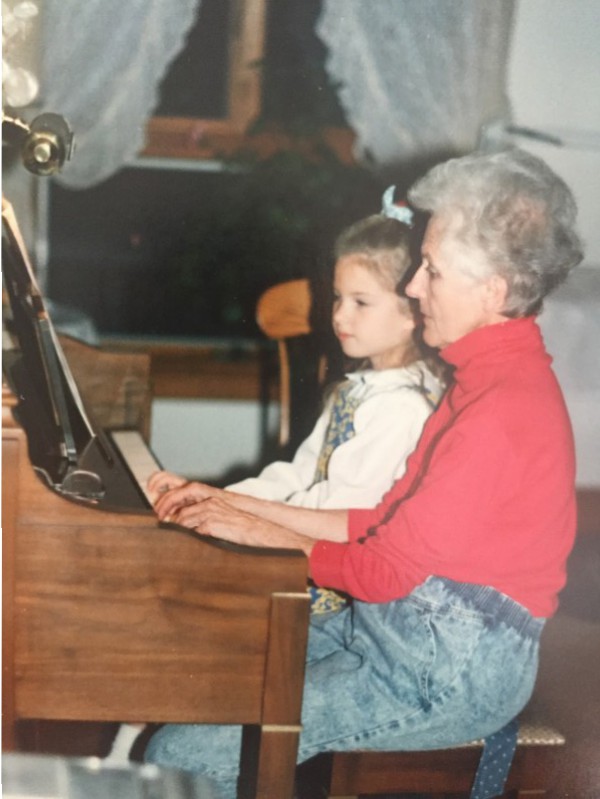
    I was fortunate to have my Grandmother living up the mountain (that’s what we say in southwest Virginia). She was a professional violist and music teacher. From the moment I was born she would play music and sing with me. There was a box of music instruments (rhythm sticks, triangle, bells, etc…) that we would play with every day. Kind of like Ready Set Play classes! When I was 5 she decided it was time to sign me up for piano lessons. I was never offered a choice about what instrument to play. A few years later I heard the Elgar cello concerto performed live and begged to play that instrument. I was drawn to the deep voice and the idea of playing with an orchestra. When my constant begging continued for more than a year, I was granted permission to study both instruments on the condition that my piano practice would come first. Well, we know how that turned out. 🙂

    Unfortunately I was not able to get answers from my grandmother to all of these questions, though she could remember a few things to include. Most of this interview is coming from my Dad.

    Q: What were your thoughts about starting lessons? Were you excited? Anxious? Confused?

    A: My music education consisted of playing clarinet in the high school band. When your Grandmother told me she wanted to sign you up for piano lessons at age 5 I was surprised. But I knew it would be a good opportunity for you.I had no idea where you would take it! I was just thinking piano lessons couldn’t hurt you…

    Q: What was the most helpful thing my teacher ever told you? Least helpful?

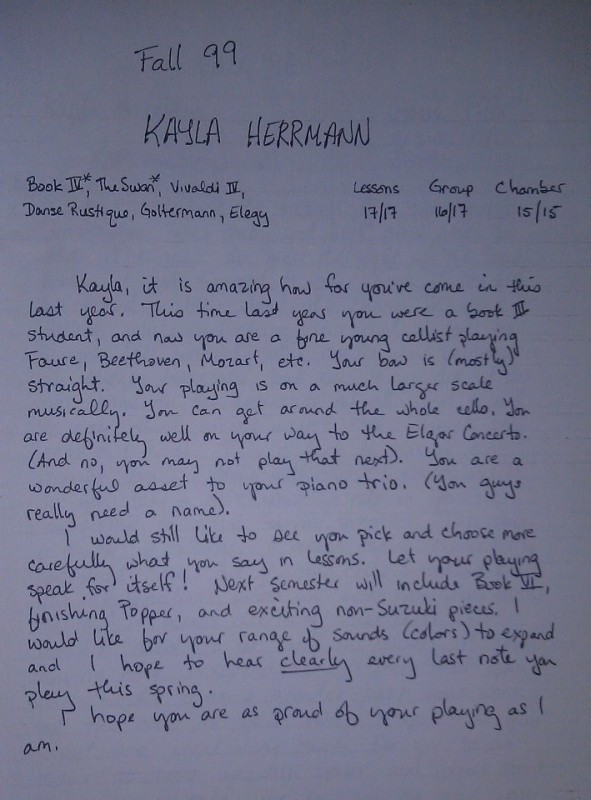
    A: You were so lucky to have an amazing Suzuki school where we lived in Virginia. (Side note–Ellen actually gave a masterclass there!!) I can’t remember one specific thing, but I remember your teacher gave us many goals for each practice week which helped a lot. The semester reports (pictured below) were also helpful because it gave us perspective on how much work you really did accomplish. Some days the progress is so slow it’s hard to see the bigger picture!

    Q: Were there times I wanted to quit? Were there times YOU wanted me to quit?

    A: As you got older, yes. I never wanted you to feel like you were forced to do it. There were times you would say “why can’t I just be a normal teenager.” But every time I gave you the option to quit you wouldn’t do it.  All the way to the point when you needed to pick between music conservatory or engineering school.

    Q: Did I always like to practice? If not, did you have any tricks that made practice easier?

    A: No, Kayla! No one always likes to practice! Cookies made it easier.

    When you were in high school there were times when you found balancing music and schoolwork quite difficult and frustrating. You were extremely motivated through your quartet and chamber orchestra and I think that carried you through so many of the difficult practice days.

    Q: Was there a point when it became clear to you that it was all worth it?

    A: As long as it was something that you wanted to do, I always felt it was worth it.  Not that there weren’t difficult days of practice, but I never felt that you truly did not want to do it.

    Q: How did you see my musical education as affecting the rest of my life?

    A: I think it did a lot to promote responsibility, organization and sense of commitment. Music taught you at an early age that it required work to make something happen. It didn’t just come because you held your hand out.

    You also had so many opportunities through your music. Your first plane ride was for a Suzuki institute. Your first international trip was for a chamber music festival. Your first trip to New York City was to play at Ground Zero with the Irish National Youth Orchestra.  And that is only naming a few of the many opportunities you had.

    Q: What’s the worst fight you remember having with me about music?

    A: There were many tears, many meltdowns. Many birthday parties you had to arrive late for or sleepovers you couldn’t do. Summer vacations included practice time. I can’t think of a worst fight, but it was hard to stand my ground about making practice a priority. But I’ve watched you become an adult and be able to make those decisions for yourself. I like to think that some of your discipline and work ethic comes from the difficult moments we spent in your childhood. Doing the thing you want vs. the thing you need to do is a very hard lesson to learn.

    Q: Is there anything you wish you had done differently?

    A: I probably regret not pushing you to go to Walnut Hill School for high school.  You were too scared to make that choice yourself and I was not anxious to send my little girl all the way to Boston at 14. But I think it would have provided you with many more opportunities than we had in Virginia.

    Q: What’s the best time you remember having with me surrounding music?

    A: Your concerts at Point Counterpoint chamber music camp in Vermont.  Those concerts were the most enjoyable ones I ever listened to.  And taking the road trips up there and back! Actually all the trips we took together for your music activities were so much fun. I can say I’ve been to so many cool places because of trips your music took us on.

    A: From my grandmother: You had worked so hard with you duet partner for the annual piano duet recital. She was sick that day so at the last minute I got on stage with you and performed. I was so nervous! My hands were shaking. But I had such a fun time getting to perform with you. Your piano teacher wrote me a beautiful note the following week.

    Kayla young
    kayla reportkayla granma


  • Faculty Feature: Sage

    I started violin at what my students consider to be the ripe old age of 7. I was not a Suzuki kid but rather took “traditional” lessons and studied at the New England Conservatory Preparatory School. Although no one told us about the Suzuki Triangle (student-teacher-parent), my mother was a huge part of my violin studies and attended lessons as my note taker and practice partner until I was about 12. Here’s a brief Q and A with my mom where she talks about some of her memories of my violin journey.

    ◊◊◊

    Q. What was the reason I started lessons?

    A. Because you wanted to. When your brother started trumpet you wanted to play an instrument too and the only instrument I knew that was small enough was a violin. I told you that and you immediately said you wanted to play violin. I thought, yeah, sure, that won’t last. But you asked me for a month nonstop, “when are you going to find me a violin teacher?” so I finally took it seriously…

    Q. What was the biggest misunderstanding you had about how the lessons/practices would go?

    A. I didn’t know that I would be so involved. And I didn’t know there would be tears. So many tears.

    Q. What was the most helpful thing my teacher ever told you?

    A. She told me a lot of helpful things that were really about life. She told us that in every piece there is a part that takes much more time to master than any other part and I think about that often– there are aspects of every challenge in life that will take longer to overcome than others. It’s to be expected and accepted. Also, when I asked her why you had to play in recitals instead of just playing “for yourself” she explained that music is to be shared and we always have to think of an audience and how to help the audience enjoy the music. She was very clear that you should always be playing with the musical interpretation you want to express or else you’re not really practicing.

    Q. Were there times I wanted to quit? Were there times YOU wanted me to quit?

    A. More than once when you were in tears I would tell you that you could quit and you would sobbingly say, “no, no! I don’t want to quit!”. Looking back, I think the temper tantrums were really frustration over difficulty rather than any desire to stop playing the violin. What you really were hoping is that I could somehow solve your difficulties, which, unfortunately I could not.

    Q. What helped us through those times?

    A. Nothing I can think of now, other than talking to other parents and learning that at least some of them were going through the same thing– I had thought we were alone and that no one else could be having these same kinds of struggles. Knowing we were not alone was very helpful.

    Q. Did I always like to practice?

    A. No, you didn’t like to practice. But you would. You had a clear understanding that you could not improve without practicing. At the time I was trying to learn how to play guitar and I recall saying to my cousin, who is an accomplished guitarist, “I don’t want to practice, I just want to be able to play guitar”. He looked at me as if I were crazy and said, “everybody wants that!” For some bizarre reason, I had thought that was an unusual desire…

    Q. Was there a point when it became clear to you that it was all worth it?

    A. Yes, absolutely. Many points. There was never a time I thought it wasn’t worth it as much as I had questions. I think I always saw a value that just because clearer and clearer. The discipline and focus you learn is invaluable. And the experience of playing in orchestra was really a highlight. The value of making music together with others was always clear to me. When I look back on my childhood my school band memories are among my happiest and you were obviously the same– you thrived in orchestra.

    Q. How did you see my musical education as affecting the rest of my life?

    A. It was invaluable. Particularly in adolescence to have a focus outside of yourself is crucial. Your brother also took music lessons [trumpet] and did not become a musician, or even pursue it after high school, but the experience was nevertheless invaluable. Plus, it brought me a huge amount of pleasure!

    Q. Is there anything you wish you had done differently?

    A. Yes. I wish I had found a way to be more peaceful and not get so engaged in struggles during practice.

    Q. What’s the worst fight you remember having with me about music?

    A. Oh man… there isn’t any one that stands out. But there were definitely some very unpleasant times– when I was near tears myself. I wish I had done a better job of helping you.

    Q. What’s the best time you remember having with me surrounding music?

    A. There were lots of good times. I think orchestra was definitely a really lovely time. Everything about that experience including the driving [one hour each way every Saturday, even on holiday weekends!] was a great time to have together. In fact, sharing all of your music experiences, including learning how to interact positively with some very demanding teachers, were really meaningful times to have together. Then there were all the concerts we attended together and the recordings we listened to and studied. I didn’t even like solo violin when you started…and now the violin repertoire includes some of my most favorite music. Your musical experiences definitely enriched my life, no question about it.

    ◊◊◊

    Here I am, age 10 or 11, practicing while my mom video taped. Things start out ok but you’ll soon see how I react when I can’t get the sound I want. Mom must have encouraged me to slow down and the next section is pretty successful until… you’ll have to watch and see. But I kept working, through the frustration, and it didn’t sound half bad by the end!

  • Faculty Feature: Ellen

    Helping you navigate your child’s musical journey and stay on course throughout all of the many ups and downs of the trip is a core part of our school’s mission. While everyone’s journey is unique, many of the wonderful and challenging aspects of music study are familiar and shared by all of us who have traveled this path. This year we will be sharing a series of articles featuring our instrumental faculty and highlighting the struggles and joys they shared with their parent partner as they were growing up and studying music. This month’s faculty feature is on our director, Ellen Silver.


    It was interesting to talk with my mom about what it was like being the parent of two Suzuki kids 35 (!) years ago and see if it can offer us any guidance as parents of music kids today.   I was not a “typical” Suzuki kid, as I started cello at school in fifth grade when a string instrument was offered to every student.  I chose cello because my younger sister in 1st grade had been chosen by lottery to play Suzuki violin in a new program, and I didn’t know what the viola was!  So that left the cello.  I learned to play simple songs pretty quickly through the traditional approach of reading notes, although my bow hold and playing position were pretty terrible, as pointed out by my Suzuki cello teacher who I started with beginning the following summer.

    How did music impact our family’s life growing up?

    Music was the focal point of our family life growing up.  With classes for both my sister and I, we spent almost every day of the week at either lessons, group classes, recitals, or orchestra or chamber music rehearsals.  My mom said that many of her happiest memories of our childhood are of the musical things we did together as a family, such as the four summers we drove from St. Louis to Steven’s Point, Wisconsin for a week-long Suzuki institute that we spent all summer reviewing and preparing for, to the years of special winter weekends and Saturday recitals, waiting to hear our friends perform our favorite advanced pieces.  As we got older, youth orchestra became a very big deal, with my mom bringing home the recordings of the pieces we were learning from the library and playing them for us for weeks.  A huge highlight was getting to see the Japanese tour group of Suzuki students play in Powell Symphony Hall in St. Louis.  We were all in awe as we heard the advanced pieces played by such young kids all in matching outfits!

    What was it like having two kids in the family studying music?  How did you  find time to fit in practicing with us?  When did we practice and how did we manage to keep it up with all of our schoolwork?  

    My mom said it was really wonderful having two kids playing different instruments.  We competed for her attention every night after dinner when we both got up from the dinner table and grabbed our instruments, jockeying for a turn to play for her.  The natural competition between us worked to keep us playing for a long time, taking turns back and forth while the dishes sat on the table and my mom listened and mostly praised us for our efforts.  Then, of course, we also loved to take each other’s instruments and try to play the pieces that were unique to each instrument.  This is how I learned the second part to the Bach Double and my sister learned Breval Sonata and annoyed each other in the process as only siblings can!  I also remember standing next to my sister with a tennis racket and chopstick, shadowing her violin playing exactly with all of the correct string crossings and bow levels…. so much fun, I wish we had a photo of that!

    How was I to practice with?  Did I take your suggestions well?

    My mom and I both remember that she was very encouraging of my playing and reminded me of what we had worked on in my lesson from her spiral note pad that she took notes on during our lessons.  I mainly remember her pointing out that my bow was almost never on “route 3” as it was usually drifting over the fingerboard.  I hated to be reminded of this, but it is surprisingly one of the things I still have to pay attention to in my playing today to get a really ringing sound.  I also remember that I didn’t like to be told to fix or focus on something WHILE I was playing, because I felt like I could never hear exactly what my mom said and just wanted to finish the part of the piece I was playing first and THEN find out what she was telling me to work on. This is something I struggle with as both a parent and a teacher, how to stop myself from interrupting when kids (especially my own!) are playing to give a suggestion that feels like it can’t wait….

    More of Ellen’s story coming soon…

  • A Closer Look into our Intro Classes

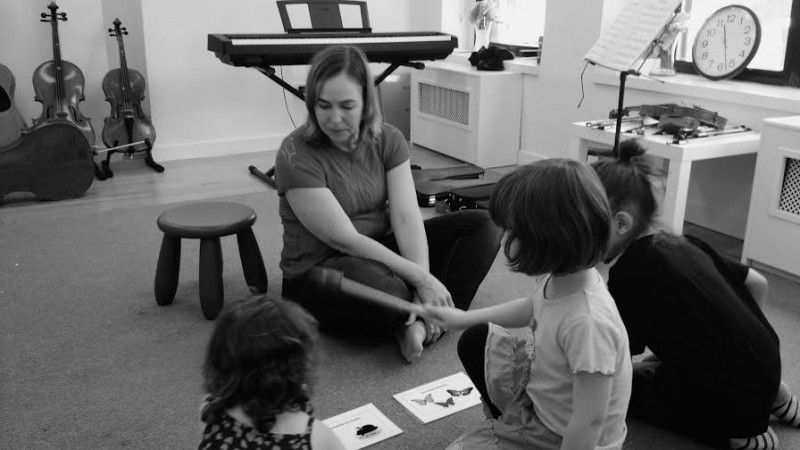
    As we look ahead to the new school year, I wanted to share my thoughts about our goals for young children participating in our introductory classes. I think it is important to realize that there is so much more going on than just making music together!  Our classes work to develop and practice critical skills at an early age. As we plan our classes we consider the following: children’s fine and gross motor skills, language skills, early literacy,  listening ability, social skills, creativity, self-esteem, ability to focus and attend to a task, ability to follow directions and work closely with a teacher, all while encouraging and supporting children’s natural love of making music and playing musical instruments. Here are a few things to note as you are observing one of our classes:

    Children develop fine motor skills while learning to correctly hold the violin and cello, bow and pluck each string, and play with curved fingers on the piano.  Finger strengthening and counting games, such as doing the itsy bitsy spider song while climbing up and down a rhythm stick with one hand,  help children develop muscles and finger awareness that are crucial to beginning an instrument.  When children use their whole bodies to move and dance to music they develop gross motor skills.  Showing the speed and style/emotion of the music, or clearly moving to beat and running along with the piano or drum are fun and engaging ways we use kinesthetic, physical approaches to increase understanding of musical concepts and expression.
    piano practice (2)

    Our classes promote language skills.  Classes for our youngest babies and toddlers are rich in rhymes and songs, singing wordless melodies with different consonant and vowel sounds, and exploring animal sounds (Carnival of the Animals is a favorite!) and naming parts of the instruments (bridge, strings, scroll, neck, frog, bow hair, tip, etc) that open up a large vocabulary of words relating to music and instruments.  Books are incorporated into classes of all ages, from the richly illustrated Carnival of the Animals,  Zin! Zin! Zin! a Violin and Meet The Orchestra, to Peter and The Wolf.
    IMG_20150427_094219350 (2)

    Classes of older children learn poems and rhymes to develop listening skills and strengthen memory, as they progress to learning short beginning pieces on the instruments.  Children become fluent in a rich musical vocabulary of instrument names and families, dynamics and tempo markings (forte, piano, Allegro, Adagio, etc.) , and other musical terms (crescendo, staff, treble, bass, etc) that help them make sense of the music they are hearing and creating.  We ask questions and encourage connection to and improvisation with sounds.  Do you like that sound?  Do you see the string moving?  Where is the sound coming from?  How can you sound like a slippery slide?  Like an elephant?  Like a bird flying?  Children are always given time to contribute ideas and opinions.
    lorene intro

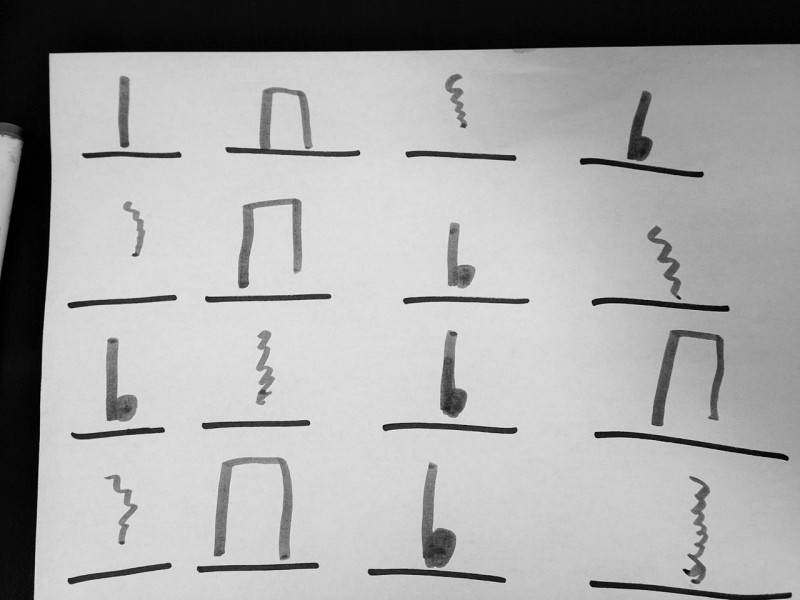
    Our students develop reading and writing readiness through speaking and understanding musical rhythms and symbols, followed by writing their own rhythms to say and play.  A beat in music can be represented by a straight line made with a popsicle stick, a line on one of our favorite rhythm cards, a line drawn on a dry erase board, or a line written on our special music paper that students fill with rhythmic notations.
    music writing (2)

    Our students develop and practice social skills critical to successful participation in pre-school and beyond.   Our small classes allow children to practice taking turns as well as the opportunity to express themselves and practice listening to and watching each other.  When we come together to create a musical piece, children feel the first glimpses of what it is like to make music with others–a lifelong thrill for musicians of all ages!
    taking turns

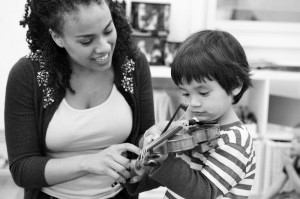
    We work on gradually increasing children’s ability to focus and follow directions, and help them begin to accept direct instruction from a teacher as they grow and mature within the class.  For example, we may point out when students are really watching their bow move in a straight line, or when they start to allow a teacher to shape their fingers the correct way on the bow.  With the teacher’s gentle encouragement, children begin to closely engage with the teacher in preparation for the more focused work of a private lesson.
    MG_9911-300x199 (2)

    Lastly and most importantly, our classes boost children’s self-esteem and pride as confident young musicians who have their own contributions to make and their own musical voices.  As their knowledge and ability grows, children become fluent in this new musical language and are ready for the next steps toward musical ability and growth.
    Noah RSP 1 (2)

    We love seeing children become expressive musical beings, at ease with and excited by instruments and full of ability!!

    -Ellen